


The Moon Must Wait: Hydrogen Leaks Ground Artemis II Until March
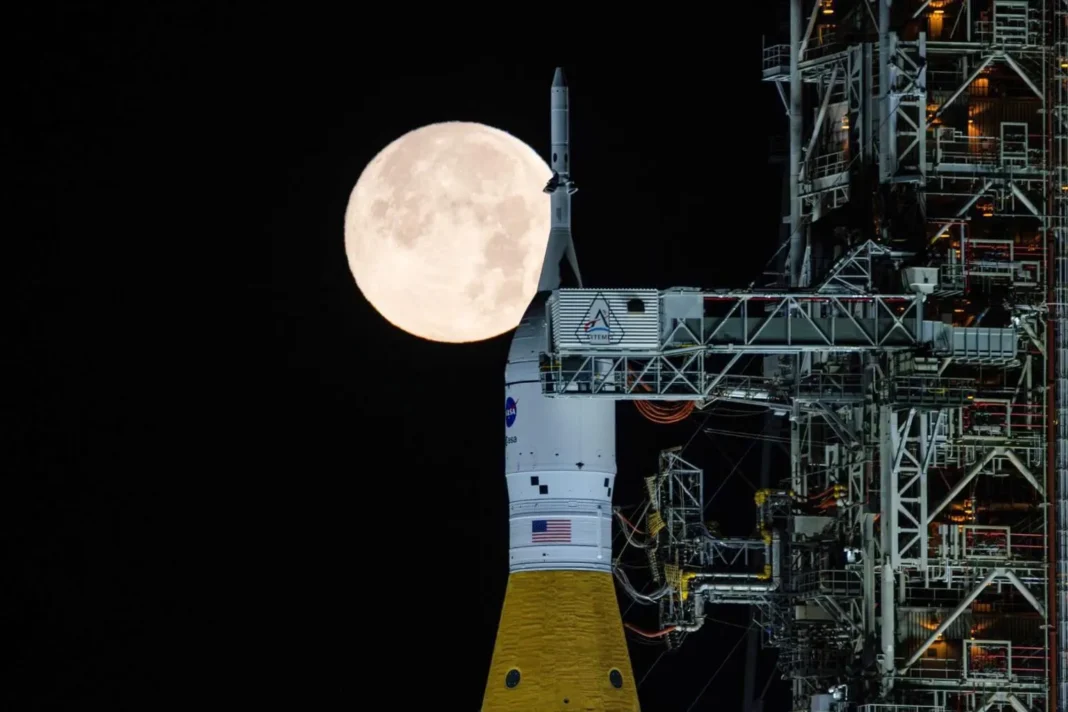
NASA’s highly anticipated return to lunar orbit has hit a familiar snag. On Tuesday, officials announced that the Artemis II mission—humanity’s first trip to the moon in over 50 years—is officially delayed until at least March 2026. The setback follows a series of stubborn hydrogen leaks during a critical “wet dress rehearsal” at the Kennedy Space Center that forced engineers to halt the countdown clock just five minutes before a simulated liftoff.
For the crew of four—Commander Reid Wiseman, Victor Glover, Christina Koch, and Jeremy Hansen—the delay means an unexpected break from the rigors of pre-launch isolation.
A “Small Molecule” Causes Big Headaches
The culprit is a recurring nemesis for NASA: liquid hydrogen. During Monday’s loading operation, sensors detected leaks in the interface between the rocket and its fuel lines. Hydrogen is the preferred propellant for the 322-foot Space Launch System (SLS) rocket because it is highly energetic, but its tiny molecular structure makes it notoriously difficult to contain, especially at minus 423 degrees Fahrenheit.
“Actually, this one caught us off guard,” admitted NASA’s John Honeycutt. Despite attempts to warm the seals and adjust flow rates—tactics that saved the uncrewed Artemis I mission in 2022—the leaks exceeded safety limits.
Safety Over Speed: The Ghost of Challenger
The decision to wave off the February launch window underscores a shift in NASA’s culture toward extreme caution for crewed missions. Amit Kshatriya, NASA’s associate administrator, reminded reporters that the SLS remains an “experimental vehicle”.
- Learning from History: Officials cited the 40th anniversary of the Challenger disaster as a somber reminder that these vehicles are not yet “operational”.
- The March Window: NASA is now eyeing a new launch window opening on March 6, 2026.
- Pad Repairs: Engineering teams believe they can fix the damaged seals directly at the launch pad, avoiding a time-consuming roll-back to the Vehicle Assembly Building.
Why This Mission Matters
Artemis II isn’t just a sightseeing tour; it is a 10-day stress test of the Orion capsule’s life-support systems. While the crew won’t land on the lunar surface, they will venture further into deep space than any humans in history, paving the way for a permanent base at the moon’s south pole later this decade.
The delay also impacts other traffic at the Kennedy Space Center. NASA is currently coordinating with SpaceX to potentially move up the Crew-12 launch to the International Space Station, ensuring the orbiting lab remains fully staffed while the moon rocket undergoes repairs.
Takeaways for Space Fans
- New Target Date: The earliest possible liftoff is now March 6, 2026.
- The Crew: The four astronauts have been released from quarantine in Houston but will re-enter isolation two weeks before the next attempt.
- Technical Fix: Repairs to the fuel line seals will likely happen on the pad to save time.