

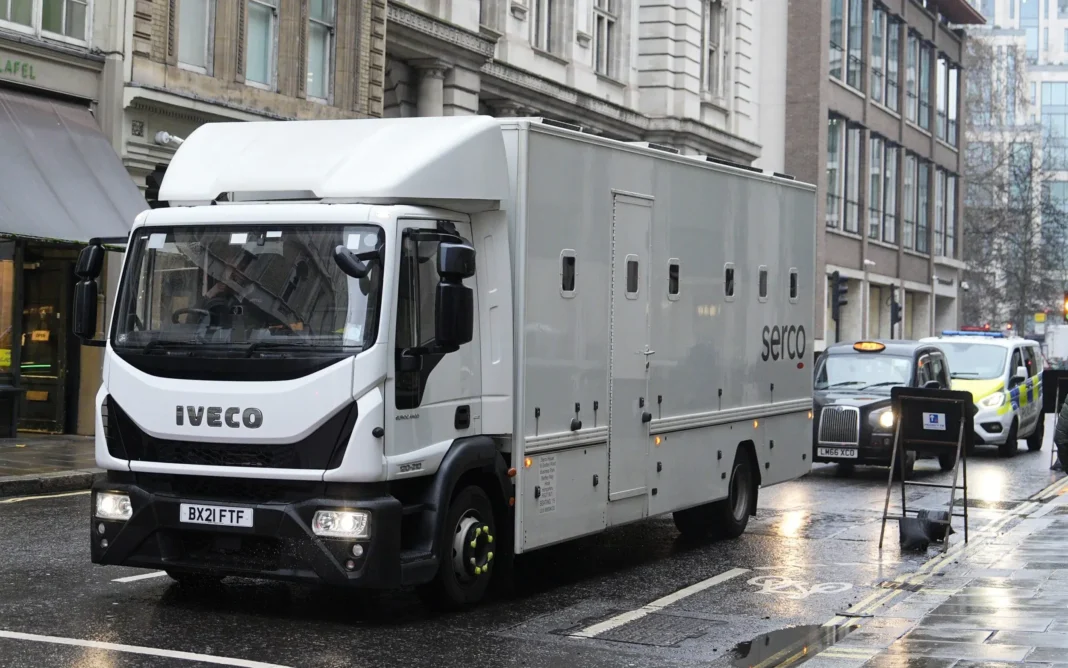

Justice in the Fast Lane: Prison Vans to Use Bus Lanes to Rescue Crumbling Courts
In a move that highlights the desperate state of the British legal system, prison vans could soon be seen tearing down bus lanes to ensure defendants reach their hearings on time. The radical proposal is part of a sweeping “blueprint for survival” authored by Sir Brian Leveson, who warned today that the UK’s criminal justice system is “on the brink of collapse”.
The High Cost of Traffic Congestion
Sir Brian’s review, commissioned by the Ministry of Justice, reveals a staggering 9,400 hours of court time were lost in a single year simply because defendants arrived late to their hearings. One murder trial, originally scheduled for four weeks, doubled in length because the defendant was repeatedly stuck in traffic.
By granting Prisoner Escort and Custody Services (PECS) vehicles access to bus lanes, officials hope to slash these “costly adjournments” and prevent the total collapse of high-stakes trials.
A System Under Siege
The logistics of transport are just one symptom of a deeper malaise. The UK is currently grappling with a mountain of nearly 80,000 outstanding Crown Court cases and over 300,000 in the magistrates’ courts.
The Leveson Proposals at a Glance:
- A “Virtual First” Approach: Sentencing and pre-trial hearings should move to videolink by default, unless a victim impact statement is being read in person.
- The End of Many Jury Trials: Defendants facing sentences of up to three years will no longer have the right to a jury, with cases instead decided by judges or empowered magistrates.
- New “Justice Tsar”: A Prime Minister’s criminal justice adviser should be appointed to oversee the fragmented work of police, prosecutors, and prisons.
- Unlimited Sitting Days: The Government is urged to scrap limits on court operating days to maximize the use of hearing rooms.
Insightful Analysis: The Commonwealth Standard at Risk
For decades, the UK’s “Gold Standard” of justice—headlined by the right to a trial by jury—has been the envy of the Commonwealth. However, these reforms suggest that the price of efficiency is a fundamental shift in the British legal identity.
The proposal to restrict jury trials for crimes carrying up to three-year sentences is particularly controversial. While this may reduce the backlog, critics argue it risks creating a “two-tier” justice system where only the most severe crimes receive the scrutiny of 12 peers. Meanwhile, the £550 million investment pledged by the Government is a drop in the ocean compared to the systemic repairs needed for crumbling courtrooms and a depleted legal workforce.
Looking Ahead
Justice Secretary David Lammy has stated he will “urgently consider” the 130 recommendations, acknowledging that while efficiency is not a “silver bullet,” the status quo is leaving victims “suffering for years”. With some trials now being scheduled as far off as 2030, the “fast lane” for prison vans may be the only thing moving quickly in a system that has largely ground to a halt.
Takeaways:
- Prison vans may use bus lanes to avoid 9,400+ hours of annual court delays.
- Jury trials to be curtailed for sentences under three years to speed up proceedings.
- Backlog has reached a historic high of nearly 400,000 cases across all courts.