
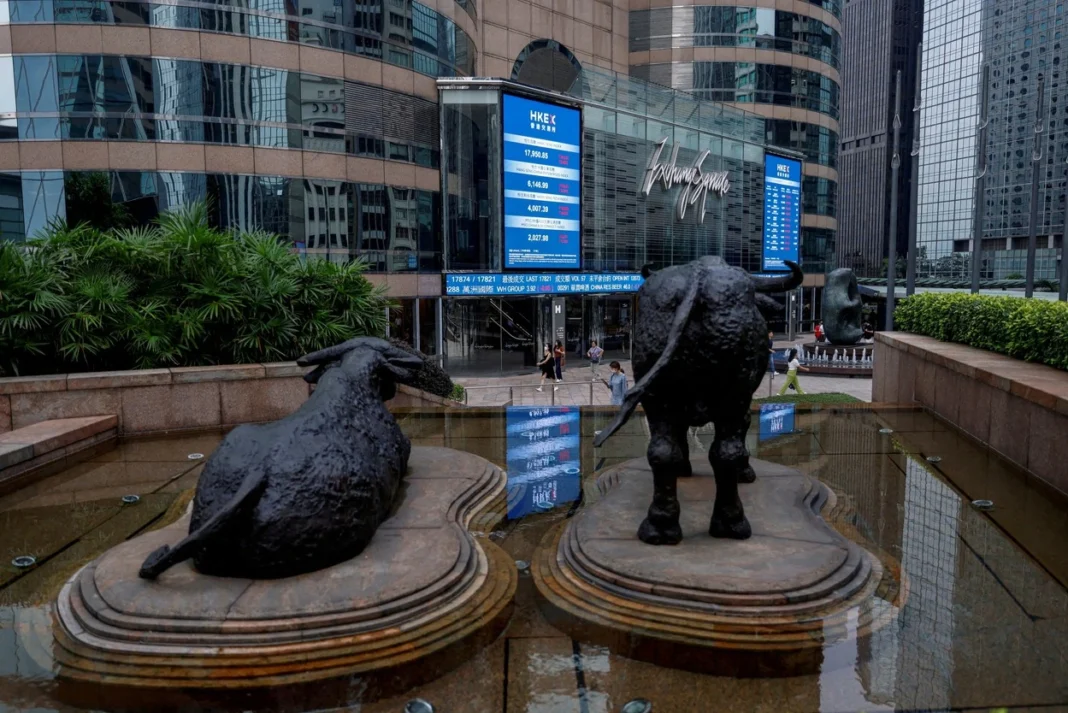

HONG KONG — A year-end surge of initial public offerings (IPOs), led by artificial intelligence (AI) startup MiniMax Group, has propelled Hong Kong’s capital markets to their most productive year since 2021. On Wednesday, six listings totaling HK$16.7 billion ($2.15 billion) were launched, signaling a robust comeback for the city’s equity markets heading into 2026.
MiniMax Group aims to raise up to HK$4.19 billion at a projected valuation of $6.5 billion. The firm, which specializes in multimodal AI models like the MiniMax M1 and Hailuo-02, has secured high-profile cornerstone investors including Alibaba and the Abu Dhabi Investment Authority. This flurry of activity follows a banner year for Hong Kong, which saw 114 new listings raise $36.5 billion in 2025—more than triple the amount raised in 2024.
The momentum is further bolstered by semiconductor specialists and other AI rivals. Companies such as OmniVision Integrated Circuits and GigaDevice Semiconductor are currently bookbuilding for IPOs targeting $600 million each. Meanwhile, MiniMax’s competitor, Knowledge Atlas Technology (Zhipu AI), launched its own HK$4.35 billion offering just one day prior. These listings highlight a strategic shift toward building a self-sufficient Chinese AI ecosystem, utilizing public funding to mitigate the impact of international tech restrictions.
The Strategic Evolution of China’s AI Ecosystem
The recent “wave of IPO approvals” in Hong Kong represents more than just a financial rebound; it signifies a calculated acceleration of China’s domestic AI development through capital market integration. While the United States currently maintains a competitive edge in frontier compute and raw model performance—largely due to superior hardware—China is leveraging public markets to foster a resilient, self-sufficient technological landscape.
Strategic Autonomy and Market Appetite By transitioning from private venture capital to public equity, firms like MiniMax and Zhipu AI are insulating themselves from external geopolitical pressures. This shift is exemplified by the diversification of their offerings; MiniMax, for instance, develops multimodal models capable of processing text, audio, images, and music simultaneously, rivaling global standards.
The Semiconductor Foundation The success of these AI firms is inextricably linked to the semiconductor industry. The massive oversubscription of onshore IPOs for chipmakers like Moore Threads and MetaX—which saw demand exceed supply by thousands of times—demonstrates an insatiable investor appetite for the hardware that powers AI. As firms like Kunlunxin (Baidu’s AI chip unit) prepare for their own debuts, the synergy between hardware manufacturers and software developers is creating a vertically integrated tech economy within the Greater Bay Area.