

Imagine waking up from an eight-month nap with one goal: double your body weight before the sun disappears again. For the grizzly bears of Alaska’s desolate North Slope, life is a high-stakes race against the calendar, and for the first time, we’re seeing it through their eyes.
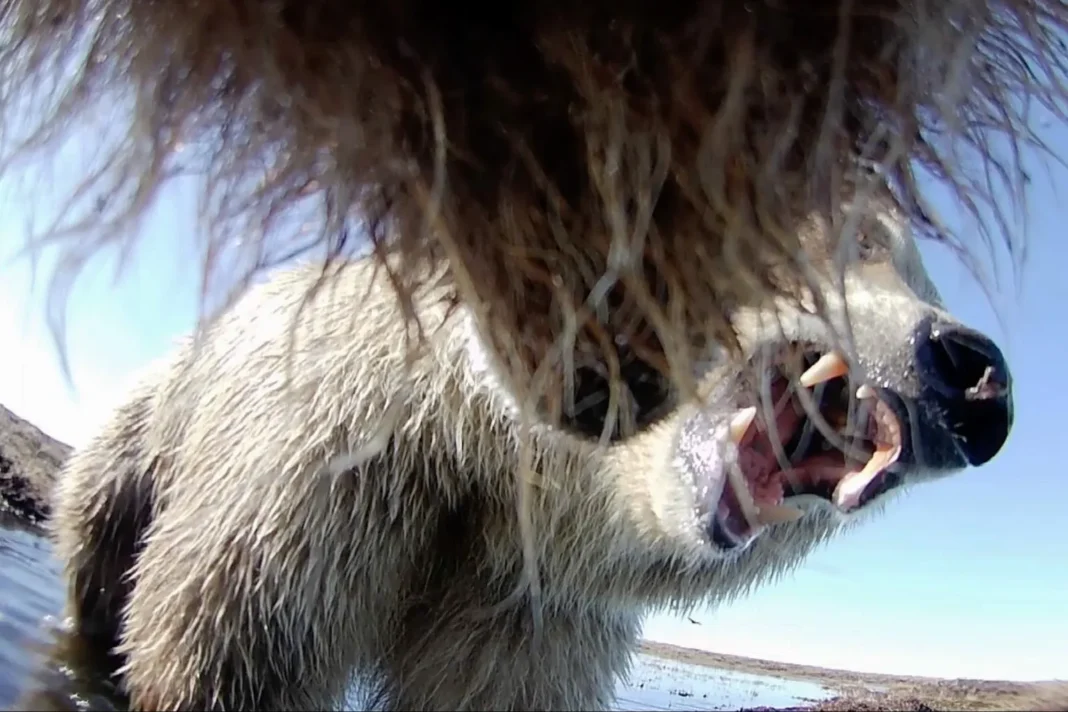
A groundbreaking collaboration between Washington State University and the Alaska Department of Fish and Game has outfitted 12 of the region’s 200 grizzlies with high-tech “collar cams”. The result? A raw, unscripted look at how these predators navigate the treeless, frozen tundra near the Arctic Ocean.
Survival of the Fittest: The 350-Pound Underdogs
Unlike their 1,000-pound cousins who feast on Alaskan salmon, these Arctic grizzlies are built for efficiency. Maxing out at roughly 350 pounds, they are significantly smaller but arguably more resilient.
According to Ellery Vincent, a WSU doctoral student leading the study, these bears have an incredibly narrow window to pack on enough fat to survive hibernation. “They really have a really short window to obtain enough food resources… to survive that period,” Vincent noted. The footage shows bears “snarfing up” blueberries and soapberries, napping on desolate beaches, and even engaging in “rough-and-tumble” play with companions.
The Arctic Menu: From Caribou Calves to Tundra Greens
The video snippets—ranging from four to six seconds every ten minutes—reveal a strategic dietary shift:
- Post-Hibernation: Bears emerge in May to scavenge caribou and musk ox carcasses.
- Summer Hunt: They pivot to hunting caribou calves.
- Fall Foraging: Once the tundra “greens up,” the menu shifts entirely to vegetation and berries.
One of the project’s most surprising clips captured a peaceful standoff between a grizzly and a pack of wolves. Rather than a bloody battle, the two apex predators simply sized each other up and moved on, deciding the conflict wasn’t worth the energy.
Why This Matters: Bears vs. the Oil Boom
This isn’t just a nature documentary; it’s a critical data mission. As oil-field development expands across the North Slope, researchers are using GPS data from these collars to map out winter denning sites.
The goal is to provide oil companies with precise “no-go zones” for building winter roads, ensuring that industrial growth doesn’t literally drive over a sleeping bear. With the North Slope covering 94,000 square miles but housing only 11,000 people, maintaining this balance is vital for the survival of the species.
Takeaways
- Remote Tech: Collar cams provide 17 hours of video, offering a “bear’s eye view” of remote behaviors.
- Conservation Focus: The study specifically tracks how grizzlies interact with the dwindling musk ox population.
- Future Growth: The project will continue for two more years, with plans to collar an additional 24 bears to deepen the dataset.