
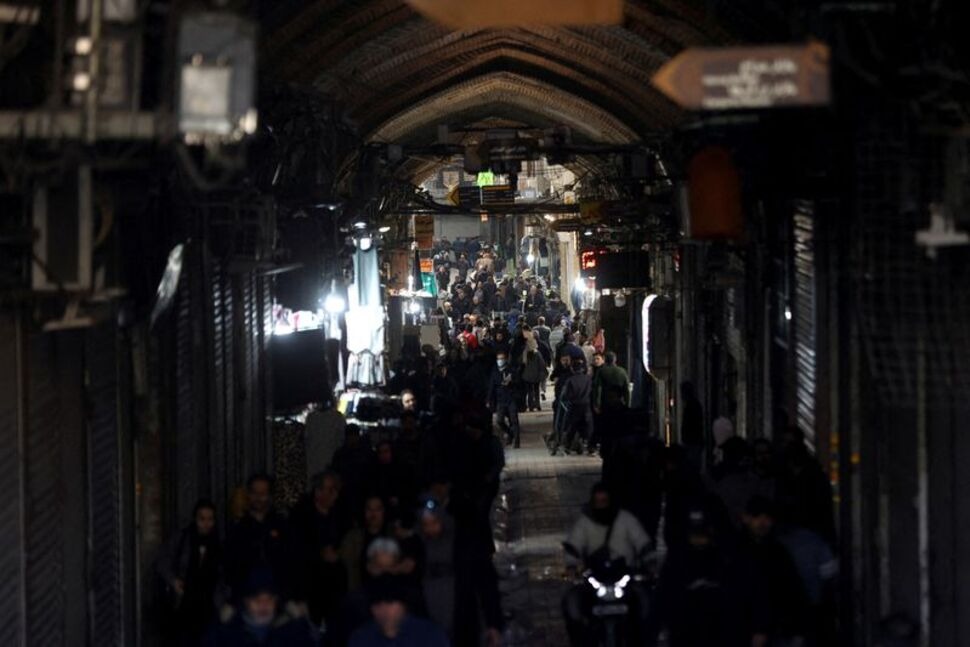

DUBAI — Several individuals were killed overnight as the largest anti-government protests in three years surged across Iran, fueled by a plummeting currency and record-level inflation. The unrest, which began Sunday with strikes by merchants and shopkeepers, has rapidly escalated into violent confrontations between demonstrators and security forces in several regions.
Fatalities were reported in the western city of Lordegan and the central province of Isfahan. In the western city of Kuhdasht, the Revolutionary Guards confirmed the death of a member of the Basij paramilitary unit, while rights groups alleged the individual killed was a protester targeted by security forces.
The Iranian rial lost approximately 50% of its value in 2025, with inflation peaking at 42.5% in December. This economic instability has been exacerbated by long-standing Western sanctions and the financial strain of a 12-day aerial conflict with Israel in June 2025. In an attempt to quell the agitation, government spokesperson Fatemeh Mohajerani announced a planned dialogue with trade unions and merchant representatives, though the administration has simultaneously deployed the Basij to suppress the “armed” elements it blames for the violence.
Analysis: A Regime Under Pressure
The current wave of domestic instability represents a critical juncture for Iran’s clerical leadership. Unlike previous localized protests centered on specific grievances—such as the 2021 water shortage riots or the 2022 women’s rights movement—the 2026 unrest is driven by a systemic economic collapse that transcends demographic boundaries.
The regime finds itself caught in a “polycrisis.” Externally, the June 2025 airstrikes by the U.S. and Israel targeted vital nuclear and military infrastructure, signaling a heightened state of regional volatility. Internally, the 42.5% inflation rate has rendered basic goods unaffordable for the middle and working classes, leading to the closure of major bazaars and university strikes.
To manage the optics of the crisis, the government has utilized two primary strategies:
- Administrative Suppression: Declaring national holidays due to “cold weather” to forcibly clear the streets and disrupt organized gatherings.
- Narrative Control: Labeling protesters as “armed” or “opportunists” to justify the use of lethal force by the Revolutionary Guards and Basij units.
While Tehran’s offer of “dialogue” suggests a conciliatory tone, the historical precedent of “tough security measures and extensive arrests” suggests that the state’s primary response remains rooted in coercive preservation.