

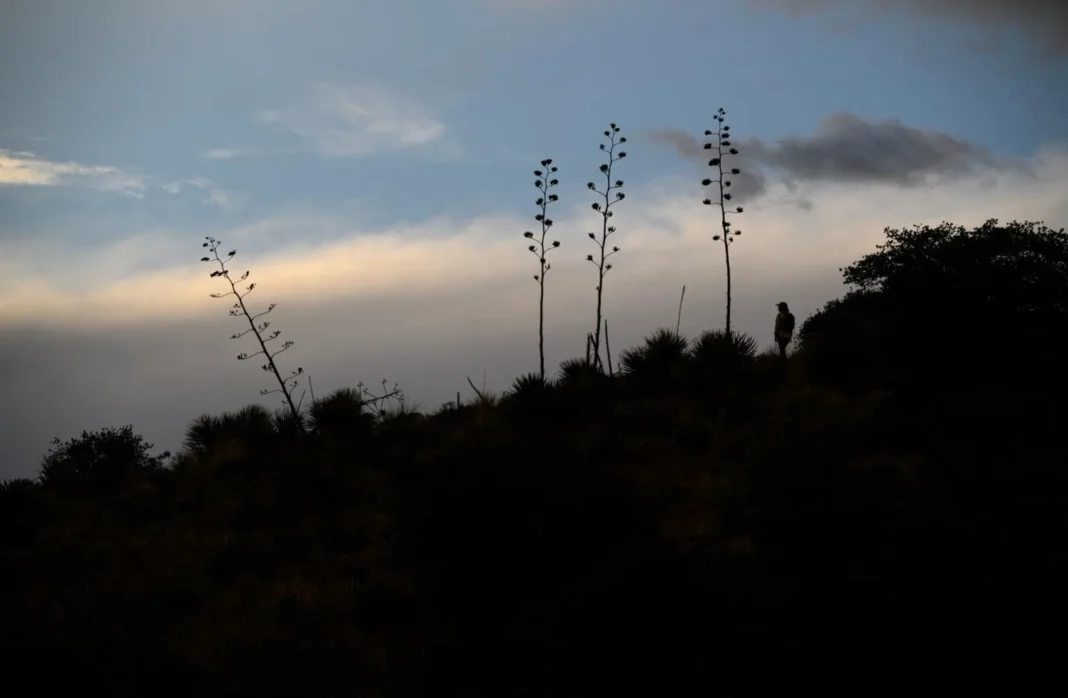

ALBUQUERQUE, N.M. – In a desperate search for survival, the endangered Mexican long-nosed bat is rewriting its own migration map. Driven by a relentless drought parching the Southwest, these winged pollinators have been detected farther north than ever before, pushing deep into the fringes of New Mexico’s Gila National Forest.
Using cutting-edge DNA technology, researchers from Bat Conservation International (BCI) confirmed that these elusive mammals are now traveling approximately 100 miles (160 kilometers) beyond their previously known roosting sites in New Mexico. This discovery highlights a shift in the delicate balance between the bats and the agave plants they depend on to fuel their grueling 700-mile journey from Mexico.
The DNA Breakthrough: Saliva Tells the Story
For decades, tracking these night-flying creatures required high-stakes capture-and-release missions. Today, the evidence is left behind in a drop of spit. By swabbing agave blooms and residential hummingbird feeders, scientists identified environmental DNA (eDNA) belonging to the species, providing proof of their northern expansion without ever touching a wing.
This same technology helped add Arizona to the bats’ migration list only last year, signaling a broader regional shift in their behavior.
Climate Stress and the “Bootheel” Crisis
The catalyst for this migration shift is a familiar foe: climate change. New Mexico’s Bootheel region, a historic stronghold for the species, has been battered by severe drought. The resulting lack of moisture means agaves—the bats’ primary fuel source—are failing to flower as they once did.
“We think these bats are trying to look for healthy agave food sources elsewhere,” explained Kristen Lear, director of the Agave Restoration Initiative at BCI. “So that’s kind of driving them farther north, where the agaves are a little bit less hit by drought”.
This detour isn’t without cost. For every extra 30 miles added to the route, these bats must endure another full night of flight, putting additional strain on a population estimated at fewer than 10,000 individuals.
Building a “Nectar Corridor” for Survival
The survival of the Mexican long-nosed bat is inextricably linked to the agave plant. Both are slow breeders: the bats produce just one pup per year, while agaves can take a decade or more to reach their first bloom.
To bridge the gap, a bi-national coalition of over 100 partners—ranging from private ranchers to government agencies—is racing to restore the “nectar corridor”. Since 2018, volunteers have planted approximately 185,000 agaves across the U.S.-Mexico border to ensure these essential pollinators have the nectar they need to survive the trip.
Why This Matters: The Big Picture
This isn’t just about a single bat species. Mexican long-nosed bats are the primary pollinators of wild agaves, which are keystone species for desert ecosystems. Without the bats, agave genetic diversity plummets; without the agave, the bats starve.
The expansion into the Gila National Forest provides a roadmap for future conservation. By identifying where the bats are heading, researchers can target restoration efforts to the “high-priority areas” most likely to sustain the species in a warming world.
Takeaways
- New Territory: Mexican long-nosed bats have moved 100 miles north of their traditional range into the Gila National Forest.
- Drought Driven: Lack of flowering agave in New Mexico’s Bootheel is forcing the bats to scout new foraging grounds.
- Conservation Action: Over 185,000 agaves have been planted since 2018 to bolster the “nectar corridor”.
- Scientific Tool: eDNA from hummingbird feeders and plants is now the primary method for tracking the species’ movement.