
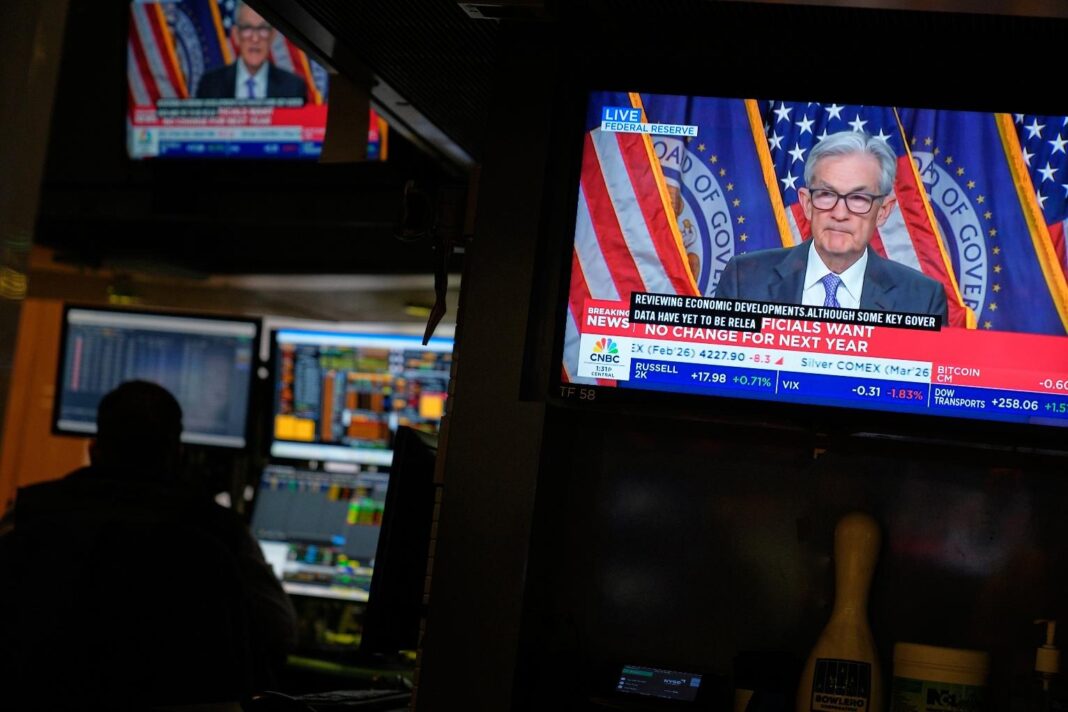

WASHINGTON — Federal Reserve officials are increasingly split over the trajectory of interest rates heading into 2026, as the central bank balances concerns of a cooling labor market against stubbornly high inflation. Minutes from the Fed’s December 2025 meeting, released Tuesday, reveal a fractured committee that narrowly approved a 25-basis-point rate cut despite three dissenting votes—two favoring a pause and one seeking a more aggressive reduction.
The policy rift emerges at a critical juncture for the central bank, as Chairman Jerome Powell’s term is set to conclude in May. While Powell could remain as a governor, he has not signaled such an intent, and he faces persistent criticism from President Donald Trump. President Trump is expected to nominate a successor who favors lower interest rates, a shift that could fundamentally alter the Fed’s approach if current economic trends persist.
“Policymakers are all over the place because there’s uncertainty in nearly every direction,” noted David Russell, global head of market strategy at TradeStation. This ambiguity is exacerbated by a lack of reliable economic data following a record-breaking government shutdown in October and November, which compromised or cancelled essential reports on employment and inflation.
Some participants suggested that the current rate level should remain unchanged for the foreseeable future to gauge the impact of previous easing. However, upcoming data releases in January—including the December jobs report and the Consumer Price Index—are expected to provide the clarity needed to determine which faction within the Fed will steer monetary policy in the coming year.
Analysis: Navigating the “Murky” Economic Landscape
The current state of U.S. monetary policy is defined by a “wait-and-see” approach necessitated by data fragmentation. The recent government shutdown—the longest in history—has left economists and investors reliant on “compromised” data sets. For instance, without a clear view of the Consumer Price Index (CPI), the Fed cannot definitively state if inflation is truly decelerating or merely fluctuating.
Furthermore, the looming leadership transition adds a layer of political complexity. Historical precedents suggest that a change in Fed chairmanship can lead to significant shifts in market sentiment. With the Trump administration likely to favor a “dovish” successor (one who prefers lower rates to stimulate growth), the Fed must weigh its institutional independence against the anticipated fiscal stimulus and its impact on GDP in 2026.