

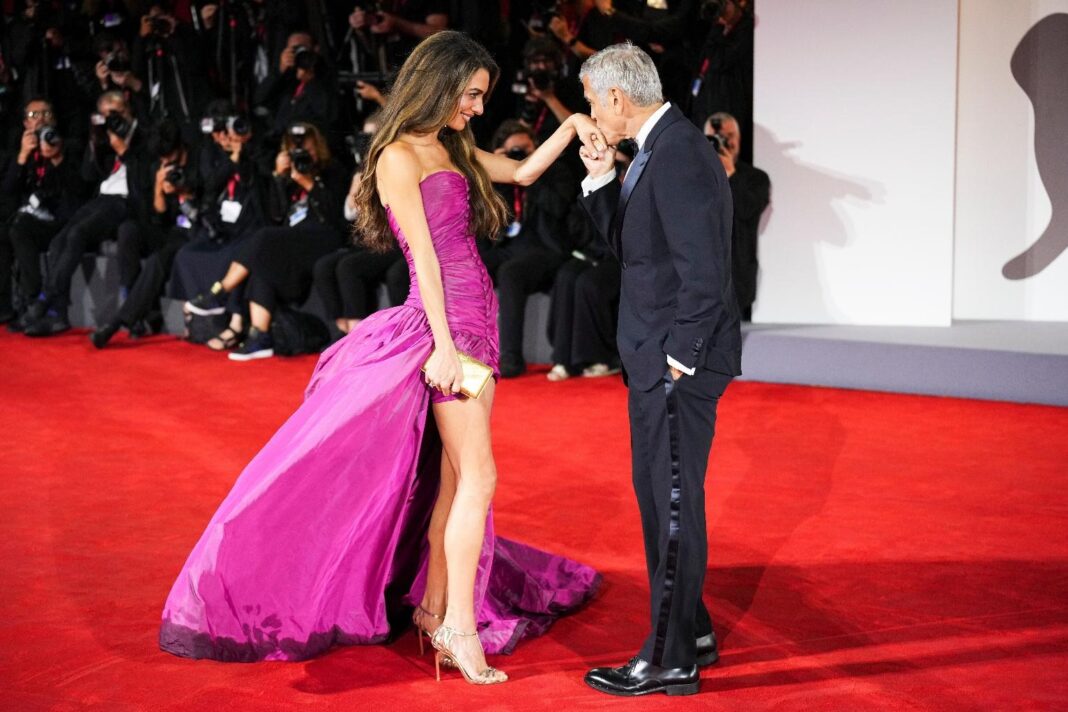

PARIS — The French government is defending its decision to grant citizenship to American actor George Clooney and his human rights lawyer wife, Amal Clooney, following criticism from within the ministry over potential “special treatment.” Officials confirmed Wednesday that the couple, along with their eight-year-old twins, Ella and Alexander, were naturalized because of their significant contributions to France’s international prestige and cultural outreach.
The move, formalized in the Journal Officiel, utilizes a specific legal provision allowing the naturalization of foreign nationals who enhance the nation’s “international influence and economic well-being.” The Foreign Ministry emphasized that the French film industry stands to benefit from George Clooney’s global prominence, while Amal Clooney—naturalized under her maiden name, Amal Alamuddin—frequently collaborates with French academic and international institutions.
However, the decision sparked internal friction. Marie-Pierre Vedrenne, a junior minister at the Interior Ministry, voiced concerns regarding “fairness,” suggesting the move sends a “poor message” to other residents seeking citizenship. Critics pointed to George Clooney’s self-admitted “horrible” French proficiency, though the actor is reportedly using a language app to improve. In contrast, his Lebanese-born, U.K.-raised wife and their children are said to be fluent.
The Clooneys, who purchased an 18th-century estate in Brignoles in 2021, now consider France their primary residence. George Clooney has stated the move was motivated by a desire to raise his children away from the Hollywood spotlight and paparazzi, citing France’s robust privacy laws as a key factor in providing them a more grounded upbringing.
Analysis: Celebrity Naturalization and National Interest
The naturalization of the Clooneys illustrates the intersection of soft power and immigration policy. While most applicants face rigorous language requirements and years of residency, France—like many nations—retains “exceptional contribution” clauses to recruit global elites who offer significant cultural or economic capital.
This practice serves as a strategic tool for “nation-branding.” By securing a global icon like Clooney, France reinforces its status as the world’s cinematic hub. Similarly, Amal Clooney’s legal expertise aligns with France’s role in international diplomacy. However, as Minister Vedrenne noted, this creates a perceived dual-standard. When “extraordinary” merit replaces standard bureaucratic hurdles, it risks alienating the general immigrant population who must navigate a far more arduous path to integration, highlighting the tension between national interest and the principle of egalitarianism.