
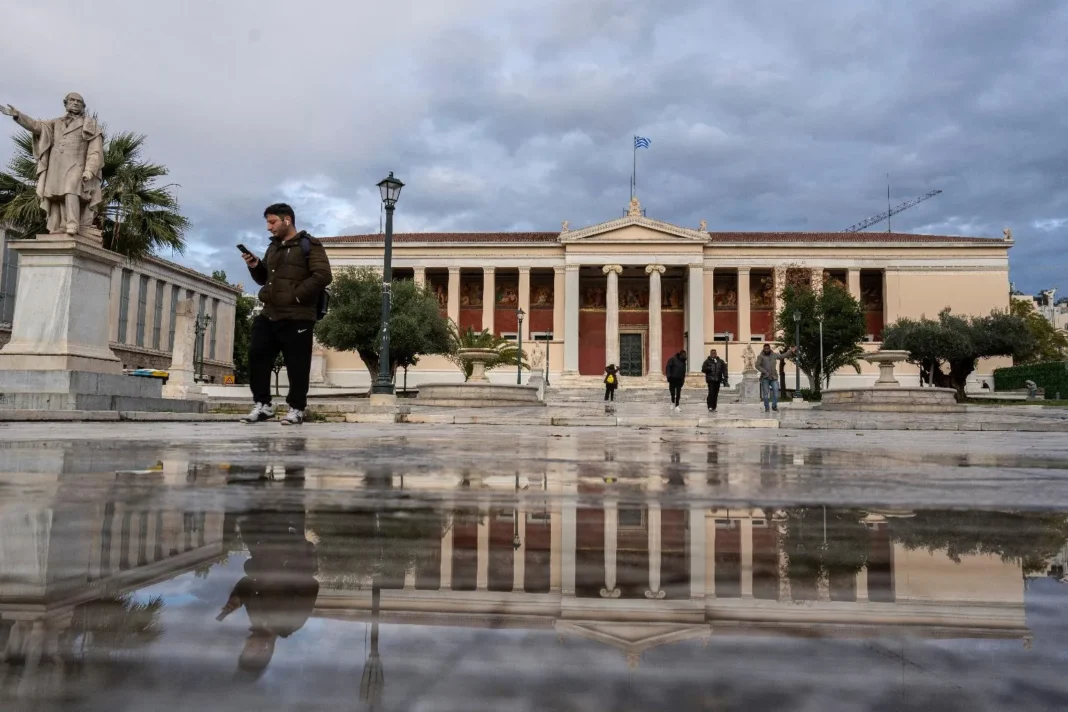

ATHENS — The Greek government has overhauled its higher education landscape by purging more than 300,000 inactive students from university registries, effectively halving the nation’s official student population. This administrative sweep marks the formal end of a decades-long policy that permitted indefinite enrollment to accommodate lifelong learning and extended employment breaks.
The Education Ministry announced Friday that 308,605 individuals admitted to state-funded, four-year programs prior to 2017 were removed from the records. Education Minister Sofia Zacharaki defended the reform, asserting that lifelong student status is incompatible with modern European standards and emphasizing that degrees must reflect tangible effort and skill.
While the ministry maintains that “dormant” students imposed no direct financial cost, officials noted they created significant administrative hurdles. Deputy Education Minister Nikos Papaioannou stated that updated registries are essential for precise institutional planning and improving the standing of Greek universities in international rankings. Approximately 35,000 individuals successfully applied for re-enrollment under a 2025 “second-chance” program, though critics argue this initiative fails to account for the systemic disruptions caused by Greece’s prior decade of financial instability.
Analytical Essay: The End of the “Eternal Student” in Greece
The recent decision by the Greek Education Ministry to strike over 300,000 names from university rolls represents a seismic shift in the nation’s academic culture. For decades, Greece was characterized by the phenomenon of the “eternal student”—individuals who remained enrolled for years, or even decades, beyond their expected graduation dates. By abolishing the legislative framework that facilitated these indefinite study breaks, the government is attempting to realign its public institutions with the Bologna Process and broader European norms.
The administrative benefits of this purge are clear. As Deputy Education Minister Nikos Papaioannou noted, bloated registries obscured the reality of campus life, making it nearly impossible for administrators to allocate resources accurately or plan for infrastructure needs. In the competitive world of international university rankings (such as QS or Times Higher Education), high “drop-out” rates—often skewed by these dormant accounts—severely penalized Greek institutions. By refining these lists, the government hopes to enhance the global prestige of its 25 public universities.
However, the reform is not without its detractors. The academic community has pointed out that many students took “long study breaks” not out of apathy, but out of economic necessity. During the Greek government-debt crisis, many students were forced to prioritize low-wage labor over lectures to support their families. Critics argue that the 2025 re-enrollment program is an insufficient “second-chance” for those whose educations were derailed by national austerity. This tension highlights a fundamental debate: should a degree be a flexible, lifelong pursuit, or a rigorous, time-bound certification of current expertise? As Greece introduces private universities for the first time, the pressure to professionalize and “sanitize” the public sector will likely only intensify.