

WASHINGTON — President Donald Trump issued an executive order on Friday blocking the $3 million acquisition of assets from New Jersey-based aerospace firm Emcore by the photonics company HieFo Corp, citing significant national security risks.
The President’s decision follows an investigation by the Committee on Foreign Investment in the United States (CFIUS), which identified specific, though undisclosed, threats to U.S. interests. In the official order, Trump noted that HieFo is “controlled by a citizen of the People’s Republic of China”. He expressed concern that the 2024 acquisition of Emcore’s business units could lead to actions that “threaten to impair the national security of the United States”.
Under the terms of the prohibition, HieFo must divest all interests and rights in the acquired Emcore assets within 180 days. The transaction, valued at approximately $2.92 million, involved Emcore’s chips business and its specialized indium-phosphide wafer-fabrication operations.
HieFo was co-founded by Genzao Zhang and Harry Moore, both former high-level employees at Emcore. While the Treasury Department confirmed the CFIUS findings, officials have not detailed the exact nature of the security risks. Neither HieFo nor Emcore have issued formal statements regarding the block.
Analysis: National Security and the Global Semiconductor Landscape
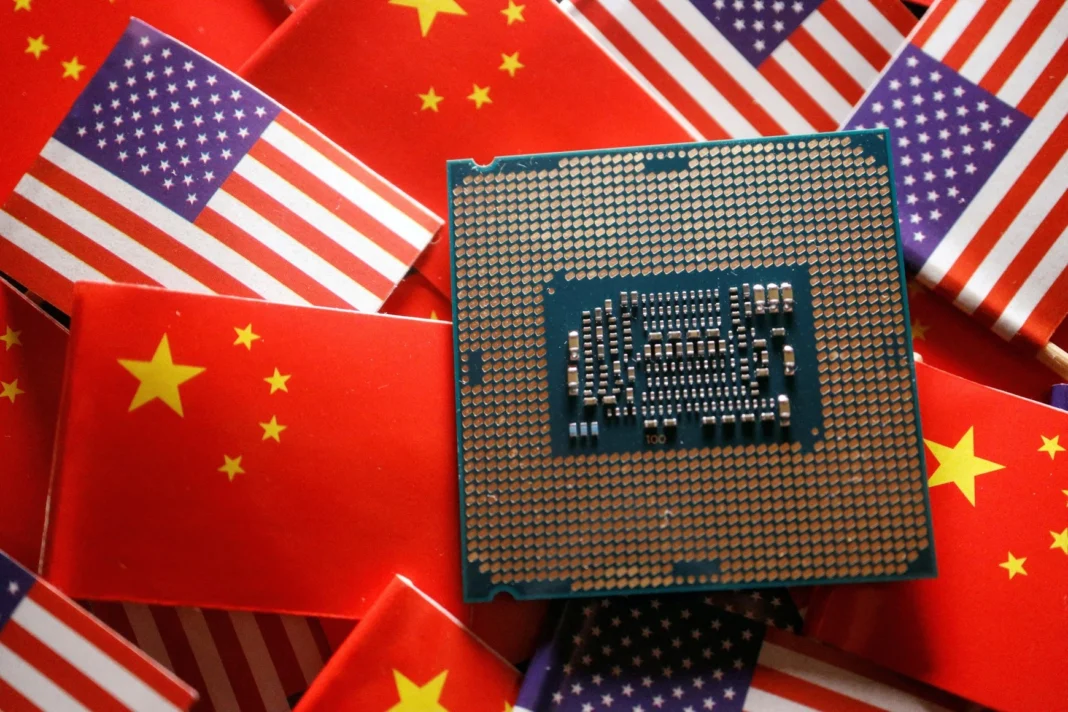
The prohibition of the HieFo-Emcore deal underscores the escalating tension in the global “chip war,” where semiconductor technology is viewed as the bedrock of modern military and economic superiority. While $3 million is a relatively small sum in global M&A, the strategic value of the assets—specifically indium-phosphide wafer fabrication—is substantial. This material is critical for high-speed photonics and fiber-optic communications, technologies that form the backbone of both telecommunications and advanced aerospace defense systems.
This move reflects a broader trend of “technological decoupling” between the U.S. and China. For example, the U.S. has increasingly utilized CFIUS to scrutinize transactions involving “foundational technologies” that could be repurposed for military use, similar to previous restrictions placed on Huawei or the CHIPS Act’s “guardrails” against expanding manufacturing in China. By blocking a firm led by a Chinese citizen from owning sensitive fabrication facilities, the administration is prioritizing the integrity of the defense supply chain over free-market acquisition.