

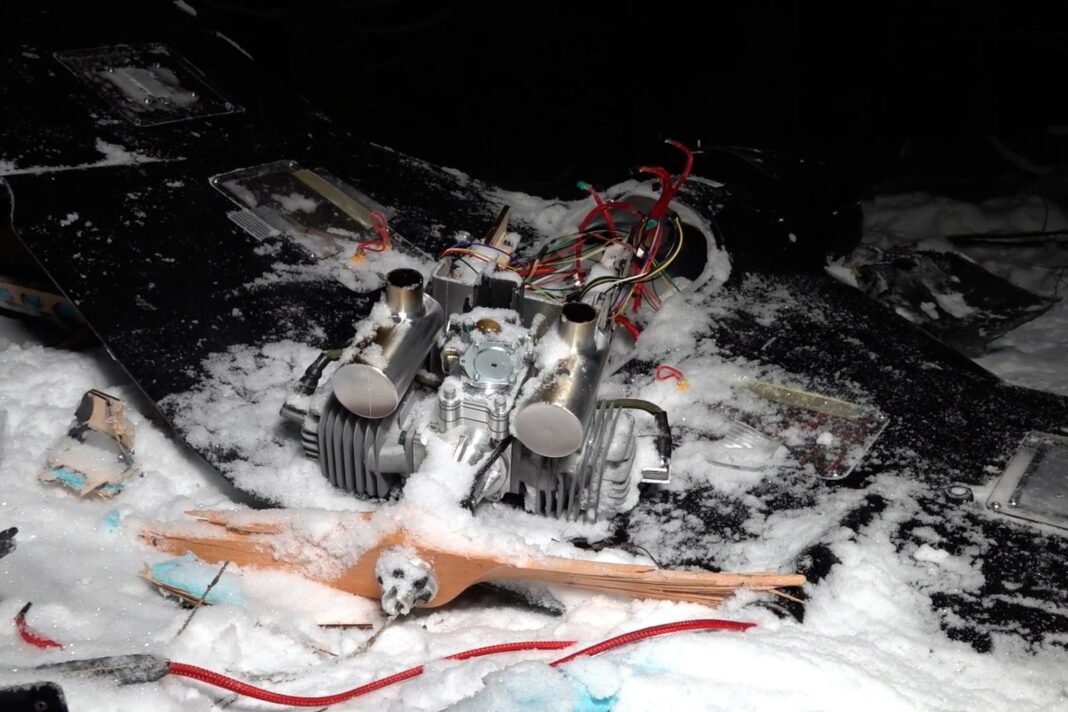

KHORLY, Occupied Ukraine — Russian officials reported Thursday that a Ukrainian drone strike killed 24 people and wounded at least 50 others during New Year’s celebrations in the occupied village of Khorly. The attack targeted a cafe and hotel in the Black Sea resort town using three drones, one of which carried an incendiary mixture that ignited a significant blaze.
While Ukrainian officials have not commented on the incident and the claims remain independently unverified, Moscow has used the event to justify its continued military objectives. Valentina Matviyenko, chair of Russia’s Federation Council, stated the strike reinforces Russia’s “initial demands” in the nearly four-year conflict.
The incident occurs amid a complex backdrop of escalating accusations and intensifying peace negotiations:
- Targeting the Kremlin: Moscow recently alleged a long-range Ukrainian drone targeted President Vladimir Putin’s residence. Kyiv dismissed this as a “lie” and a “ruse” intended to sabotage diplomatic progress.
- Diplomatic Momentum: Despite the violence, U.S. and European envoys reported “productive” discussions regarding security guarantees and deconfliction mechanisms. President Volodymyr Zelenskyy noted a peace deal is “90% ready,” though critical territorial disputes remain.
- Infrastructure Warfare: Kyiv continues to lobby the IAEA for intervention following Russian strikes on Dec. 23 that threatened the power connections of Ukrainian nuclear plants. Simultaneously, Russia launched 205 drones overnight targeting Odesa and other regions, with Ukraine reporting 176 intercepted.
Analysis: The Paradox of Escalation and Diplomacy
The strike in Khorly epitomizes the “dual-track” reality of the current conflict: unprecedented diplomatic proximity paired with ruthless tactical escalation. As negotiators move closer to a framework for peace, both nations appear to be intensifying strikes to secure maximum leverage at the bargaining table. For Russia, highlighting civilian casualties in occupied territories serves to consolidate domestic support and frame Ukraine as an aggressor. Conversely, Ukraine’s focus on energy infrastructure and nuclear safety highlights the systemic risk Russia poses to European stability. This “violence for leverage” strategy risks hardening the final 10% of negotiations that Zelenskyy warns will “determine the fate of Europe”.