

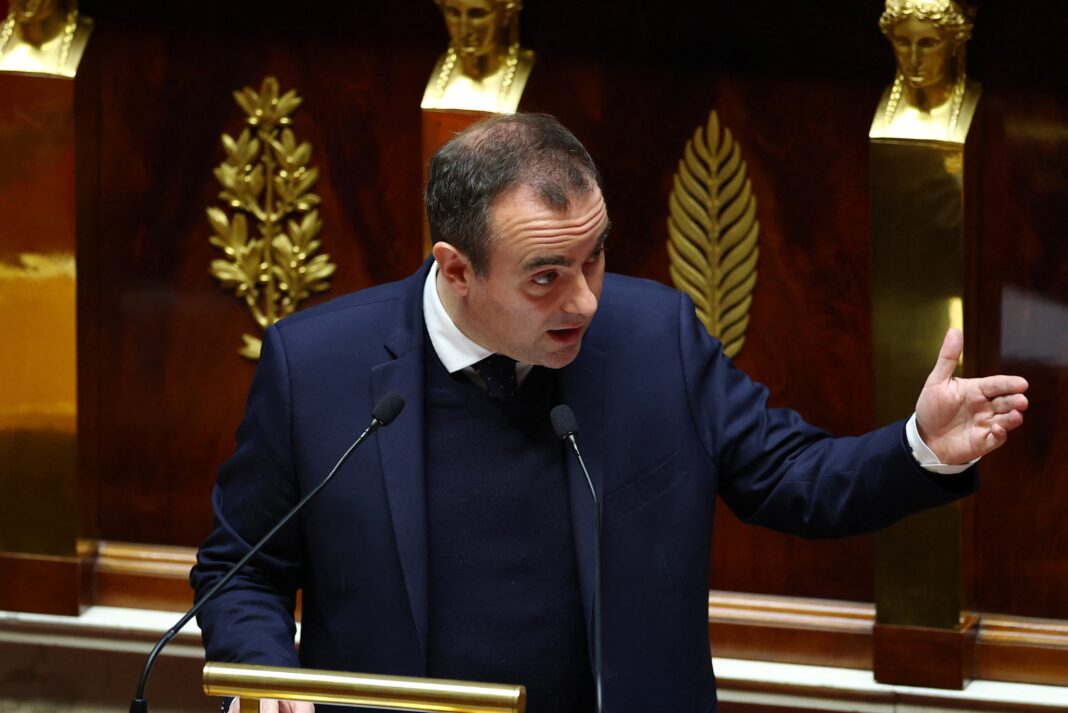

The Survival of the Fragile: Lecornu’s Constitutional Gambit
In a high-stakes display of constitutional maneuvering, the French government narrowly avoided collapse on Friday, January 23, 2026. Prime Minister Sebastien Lecornu successfully weathered two separate no-confidence motions in the National Assembly, effectively securing the “revenue” portion of the 2026 budget (PLF 2026) without a formal parliamentary vote.
The reprieve, however, appears more like a tactical pause than a definitive victory. Faced with a fragmented lower house where no single party holds a working majority, the executive branch was forced to deploy Article 49.3—a controversial constitutional clause that allows a bill to pass unless the government is toppled by a majority vote.
The Arithmetic of Dissent
The legislative assault came from both ends of the political spectrum, yet ultimately failed to reach the 288-vote threshold required to unseat the cabinet.
- The Left-Wing Challenge: A motion tabled by La France Insoumise (LFI), supported by the Greens and Communists, garnered 269 votes.
- The Far-Right Bloc: A second motion, spearheaded by the Rassemblement National (RN) and the UDR, drew even less support.
- The Socialist Pivot: The government’s survival was largely underpinned by eleventh-hour concessions made to the Socialists earlier this month, ensuring they would not join the effort to topple Lecornu.
Fiscal Reality vs. European Expectations
At the heart of this political turmoil is a struggle to tame France’s ballooning deficit. Prime Minister Lecornu has pledged to keep the 2026 deficit at 5% of GDP—a slight improvement from the 5.4% recorded in 2025.
However, this target remains significantly higher than the European Union’s 3% cap, placing Paris in a precarious position with Brussels. Far-right leader Marine Le Pen has already signaled that the political cost for this “budgetary bloodletting” will be extracted at the ballot box, specifically citing the upcoming local elections in March and the 2027 presidential race.
“The French people see you, and they will make you pay for it at the ballot box,” Le Pen warned lawmakers prior to the vote.
The French Angle: Governing by Decree?
For the international community and expats living in France, this saga highlights the “new normal” of the Fifth Republic: governance by exception. The frequent use of Article 49.3 reflects a deep-seated institutional mismatch where the executive must bypass a gridlocked parliament to ensure the state remains “afloat” on an emergency rollover budget.
The battle is far from over. The Prime Minister is expected to invoke Article 49.3 again to force through the expenditure part of the budget, a move that will almost certainly trigger a fresh round of no-confidence motions. The government remains optimistic that the final budget will be definitively adopted by the first half of February.