

WASHINGTON — A federal judge has issued an order to pause a massive “reduction in force” (RIF) at the U.S. Department of Education, temporarily blocking the Trump administration from terminating hundreds of employees during an ongoing government shutdown. Judge Susan Illston of the U.S. District Court for the Northern District of California ruled Wednesday that the layoffs appeared politically motivated and likely violated federal laws governing civil service reductions.
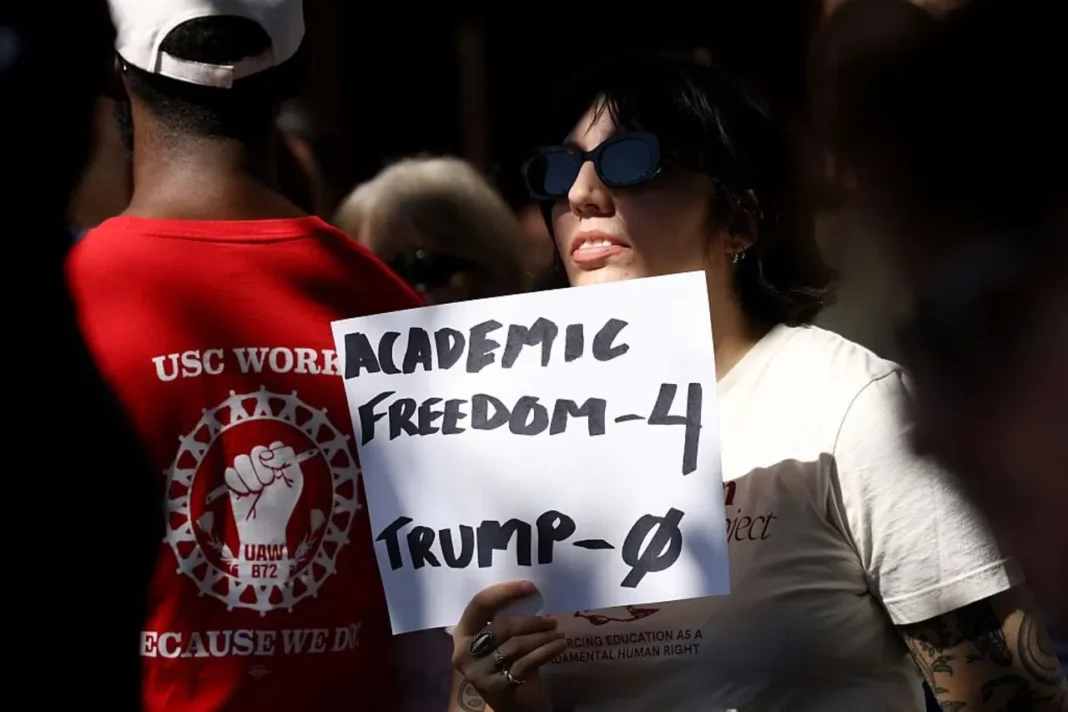
The ruling follows a lawsuit from two major labor unions, the AFGE and AFSCME, which argued that the administration used the funding lapse as an illegal pretext to dismantle programs authorized by Congress. Roughly 466 employees—about 20% of the current workforce—had received layoff notices prior to the court’s intervention. This follows a previous “purge” in March that eliminated nearly 2,000 positions, roughly half the agency’s staff at that time.
Education Secretary Linda McMahon defended the cuts, stating the shutdown proves the department is “unnecessary” and that education oversight should return to the states. Impacted divisions include the Office for Civil Rights and the Office of Special Education and Rehabilitative Services. While McMahon asserts that funding for students remains unaffected, critics argue the removal of federal oversight staff jeopardizes mandated protections for vulnerable learners.
The broader stalemate continues as the federal government enters its third week of closure. While the Republican-led House has passed a stopgap funding bill, Senate Democrats have blocked the measure, demanding the inclusion of health insurance tax credit extensions. With House Speaker Mike Johnson refusing to reconvene the House until the Senate acts, the shutdown—and the legal battle over the future of the Education Department—remains at a standstill.
The Political Weaponization of Administrative RIFs
The current impasse at the Department of Education represents a significant escalation in the use of “Reductions in Force” (RIFs) as a tool of executive policy rather than mere fiscal management. Traditionally, a RIF is a bureaucratic mechanism used to balance budgets or streamline agencies during genuine reorganizations. However, by targeting employees whose programs are “not consistent with the President’s priorities,” the administration is effectively attempting an administrative “veto” of Congressional mandates.
For example, when an administration eliminates the staff responsible for the Office for Civil Rights or Special Education oversight, the laws those offices govern—such as the Individuals with Disabilities Education Act (IDEA)—remain on the books, but their enforcement becomes functionally impossible. This creates a “hollowed-out” agency where the legislative intent of Congress is nullified not through the repeal of laws, but through the strategic removal of the human capital required to execute them. Judge Illston’s ruling highlights this tension, suggesting that the executive branch cannot unilaterally shutter departments that Congress has legally established and funded.