

The “Coalition of the Willing” vs. Moscow: A High-Stakes Continental Brinkmanship
As the frost deepens across the European continent, the diplomatic temperature between Paris, London, and Moscow has reached a sub-zero nadir. Following a landmark “declaration of intent” signed in Paris by French President Emmanuel Macron and UK Prime Minister Keir Starmer, Russia has issued a chilling rejoinder: any Western boots on Ukrainian soil will be treated as “legitimate combat targets”.
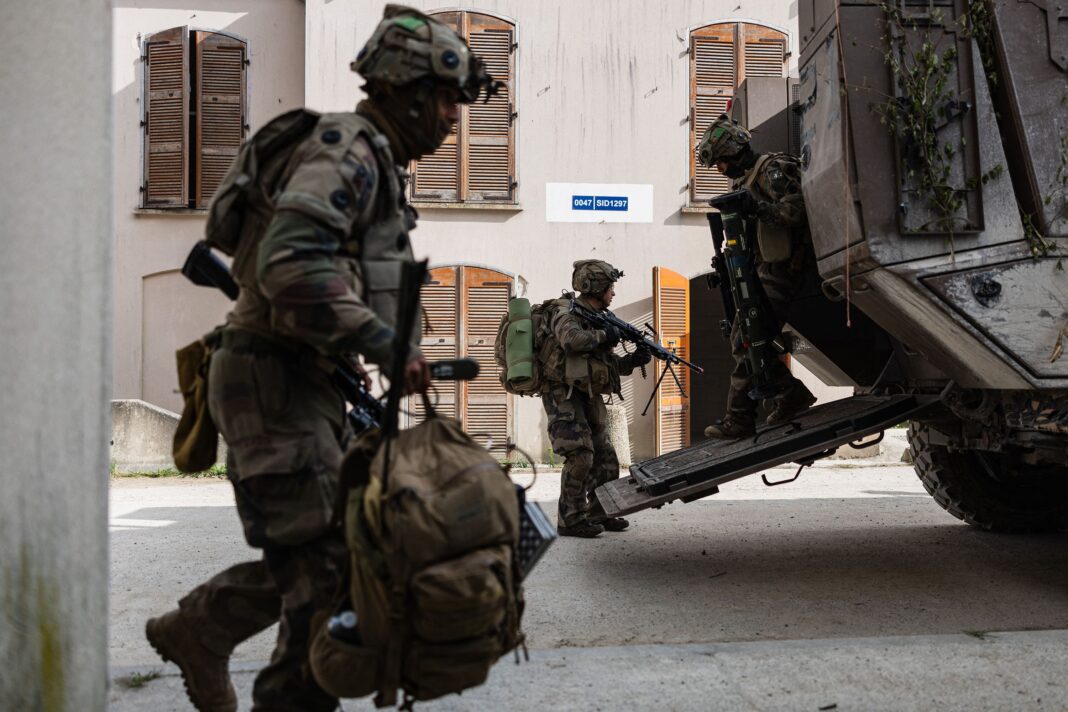
The agreement, forged during the latest summit of the so-called “Coalition of the Willing,” establishes a formal legal framework for British and French forces to operate within Ukraine’s borders. While the Western allies frame the move as a necessary “reassurance force” to guarantee a potential peace deal, the Kremlin views it as nothing less than a “foreign intervention”.
Moscow’s Red Line: From Peacekeepers to “Targets”
The Russian Foreign Ministry was swift to condemn the Anglo-French pact. Spokesperson Maria Zakharova characterized the agreement as a “new militaristic declaration,” warning that military units, warehouses, and infrastructure belonging to Western nations would be classified as hostile entities upon deployment.
“These warnings have been voiced repeatedly at the highest level and remain relevant,” Zakharova stated, emphasizing that Russia remains diametrically opposed to any Western military footprint in the region.
This rhetorical escalation comes as Russia intensifies its “winter war” strategy, launching relentless strikes on Ukraine’s energy grid. With temperatures in Kyiv plummeting to $-20^{\circ}C$ ($-4^{\circ}F$), the humanitarian crisis has become a central lever in the ongoing negotiations.
The Strategic “Why”: Deterrence vs. Diplomacy
For President Volodymyr Zelenskyy, the commitment from Paris and London represents the “robust security guarantees” he has long demanded to prevent a future Russian invasion. The plan involves:
- A Multinational Force: Deploying units to secure Ukraine’s skies and seas.
- Infrastructure Integration: Establishing Western military facilities and warehouses on Ukrainian soil.
- Legal Scaffolding: Creating the framework for troops to operate legitimately under international law.
Prime Minister Starmer remains cautious, noting that while the framework is ready, “Putin is not showing that he’s ready for peace”. The success of this European-led initiative now hinges on finalization with the United States—a process Zelenskyy claims is “essentially ready”.
The French Angle: Strategic Autonomy in Action
From the perspective of the Élysée, this move is a quintessential manifestation of “Strategic Autonomy.” By leading the Coalition of the Willing alongside the UK, France is positioning itself as the primary architect of European security, independent of the shifting political winds in Washington.
Domestically, the Macron administration faces the delicate task of framing this not as an entry into war, but as an investment in a “just peace.” In French political circles, the focus is on the philosophy of “Strategic Ambiguity”—forcing Moscow to calculate the cost of attacking NATO-member troops who are officially there to monitor a ceasefire rather than engage in frontline combat.