
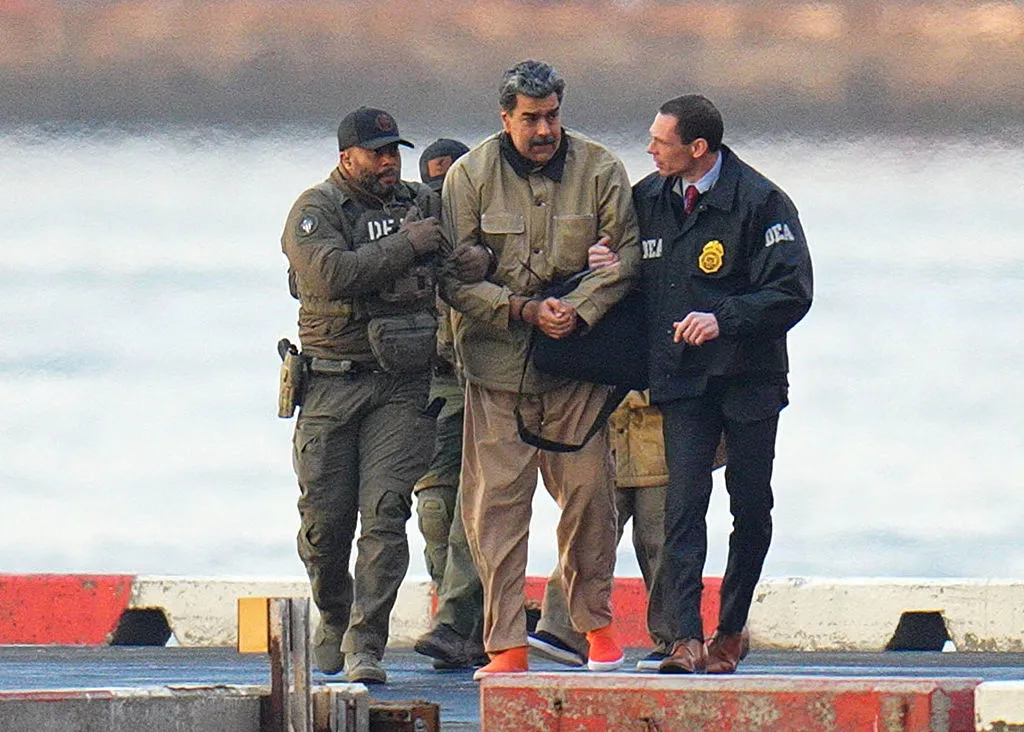

NEW YORK — Deposed Venezuelan leader Nicolás Maduro pleaded not guilty to federal narco-terrorism and weapons charges in a Manhattan courtroom on Monday, two days after U.S. special operations forces captured him in a daring raid in Caracas. Maduro, 63, was flown to New York over the weekend and is currently held at the Metropolitan Detention Center in Brooklyn. The U.S. Department of Justice alleges Maduro led a decades-long conspiracy to “flood” the United States with cocaine, collaborating with guerrilla groups and international cartels to use the Venezuelan state as a criminal enterprise.
The capture occurred early Saturday morning when U.S. forces, including Delta Force and the 160th Special Operations Aviation Regiment, extracted Maduro and his wife, Cilia Flores, from a residence at the Fort Tiuna military base. Following the operation, Venezuela’s Supreme Court appointed Vice President Delcy Rodríguez as interim leader. While the White House hailed the mission as a victory for the “rule of law,” several international allies and regional neighbors have raised concerns regarding the precedent set by the extraterritorial removal of a sitting head of state.
The Extraction of a Strongman: Geopolitics in the Post-Maduro Era
The apprehension of Nicolás Maduro marks the most significant U.S. military intervention in Latin America since the 1989 removal of Manuel Noriega in Panama. This operation was not a sudden impulse but the culmination of months of strategic posturing. Throughout late 2025, the U.S. quieted diplomatic channels while significantly expanding its naval presence in the Caribbean, deploying the USS Gerald R. Ford carrier strike group under the guise of counter-narcotics exercises.
This “show of force” eventually transitioned into direct action. The 2026 indictment reveals a sprawling web of alleged criminal activity, linking the Maduro administration to the Cartel of the Suns and the Tren de Aragua gang. Unlike previous years where sanctions were the primary tool of American foreign policy, the current administration opted for a “kinetic” solution, citing national security threats posed by Maduro’s ties to FARC and ELN remnants.
However, the legal battle ahead is fraught with complexity. Defense attorneys are expected to argue sovereign immunity, questioning whether U.S. domestic courts have the jurisdiction to try a foreign leader who, at the time of his capture, was recognized by the Venezuelan Supreme Court and military as the legitimate president. Meanwhile, in Caracas, the transition to Delcy Rodríguez remains fragile. While the U.S. hopes this move will trigger a democratic transition, it also risks creating a power vacuum in a nation already crippled by hyperinflation and social unrest.